
How Are Weld Nuts Shaping the Future of High-Strength Fastening Solutions?
Weld nuts occupy a critical position in modern fabrication, metalworking, and industrial assembly. As specialized fasteners designed to be permanently fused to metal substrates, they provide a reliable, vibration-resistant, and load-bearing threaded point that conventional nuts cannot match.
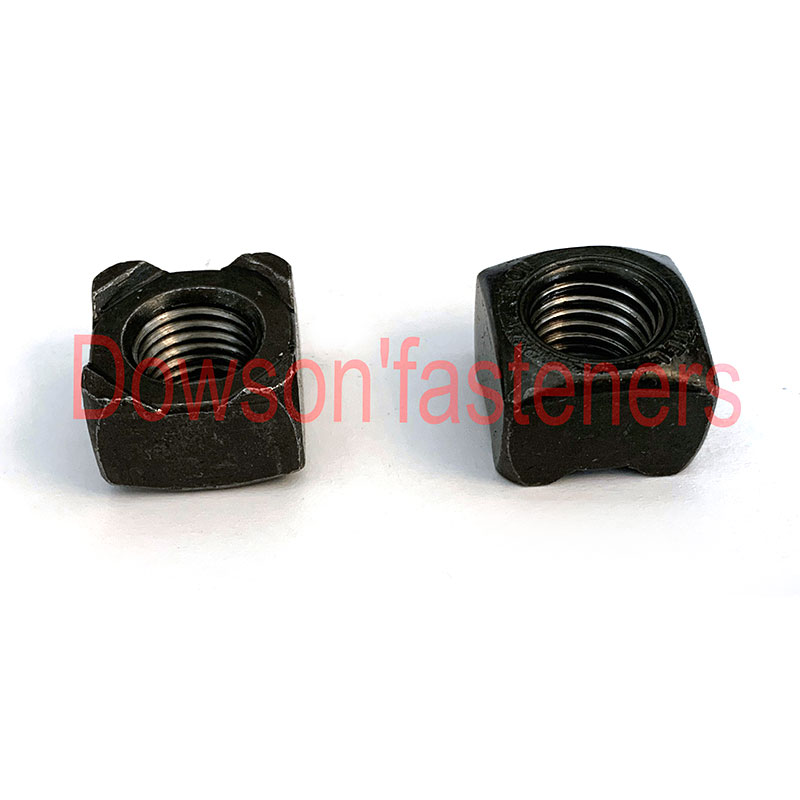
Below is a representative technical profile of standard weld-nut configurations to support engineering and sourcing teams:
| Parameter | Specification Range |
|---|---|
| Material Options | Low-carbon steel, stainless steel (304/316), alloy steel |
| Thread Sizes | M3–M16 (metric), #6–5/8-11 (UNC/UNF) |
| Weld Types | Projection weld, spot weld, flange weld |
| Geometry | Round, square, hex, flange-style, tabbed |
| Surface Finish | Plain, zinc-plated, black oxide, phosphate |
| Hardness | Typically 140–180 HB for low-carbon steel variants |
| Temperature Resistance | Up to 400°C depending on alloy |
| Application Substrates | Sheet metal, structural steel frames, tube assemblies |
| Production Tolerance | ±0.05–0.10 mm depending on thread class |
How Do Weld Nuts Deliver Structural Assurance Across Industrial Applications?
Weld nuts achieve structural stability through metallurgical bonding between the nut body and the fabricated component. The welded interface eliminates the risk of rotational loosening and provides a permanent threaded anchor capable of carrying dynamic loads, torque stresses, and cyclic vibration. In practice, weld nuts enable assembly efficiencies because technicians can complete downstream fastening operations from a single side of the structure. This allows manufacturers to streamline production sequences and reduce reliance on manual nut-holding operations.
In automotive manufacturing, weld nuts are used extensively on chassis frames, seat structures, suspension brackets, exhaust system attachments, and battery-module housings. Their resistance to vibration-induced loosening enables consistent performance through millions of load cycles. In HVAC and appliance fabrication, weld nuts are favored for panels, enclosures, and support structures where repeated service access is required. Heavy machinery producers employ weld nuts to establish threaded points on thick-gauge metal, where conventional fastening methods may be impractical or structurally inferior.
Projection-weld nuts—featuring small protrusions that direct heat concentration—are a dominant choice for high-volume facilities using automated robotic welding lines. Flanged weld nuts offer improved bearing surface coverage, reducing distortion on thin sheet metal. Square and hex profiles support torque-intensive applications, especially where thread alignment, shear loading, or repeat service operations are anticipated. Each style contributes to a controlled welding environment that produces predictable, uniform joint strength.
How Can Weld Nut Selection Improve Operational Efficiency and Long-Term Equipment Reliability?
Selecting the correct weld nut influences both assembly efficiency and lifecycle performance. Several engineering considerations shape decision-making:
Thread Class and Tolerance Requirements
High-precision assemblies benefit from controlled thread tolerances. Components subjected to frequent maintenance require smooth threading engagement to prevent operator wear, tool cross-threading, or premature thread failure. Thread class selection must balance performance tolerances, coating thickness, and weld-distortion allowance.
Material Compatibility and Corrosion Resistance
Stainless-steel weld nuts provide robust corrosion protection for environments exposed to chemicals, moisture, or temperature cycling. Zinc-coated variants suit moderate environmental exposure while maintaining cost efficiency. Alloy steel weld nuts reinforce strength performance where high torque and tensile loads are standard operating conditions.
Welding Method Selection
Projection welding promotes consistent fusion in automated production lines, minimizing spatter and heat-affected-zone distortion. Spot welding is suitable for lighter-gauge materials, while flange welding offers superior load distribution. The chosen method must align with production line capabilities, welding equipment compatibility, and cycle-time constraints.
Operational Load and Vibration Dynamics
Applications subject to continuous vibration—industrial equipment, off-road vehicles, transport machinery—benefit from weld-nut integration rather than mechanical threading or riveted solutions. The metallurgical bond weakens the typical pathways for vibrational loosening, contributing to prolonged structural stability.
Downstream Assembly Considerations
Because weld nuts create a fixed thread point, they enable rapid assembly procedures. Automated screw-driving systems function more efficiently when aligning with fixed nuts rather than free nuts, reinforcing throughput gains and repeatability in large-scale assembly operations.
How Will Weld-Nut Technology Evolve as Fabrication Standards Change?
Industrial manufacturing continues to shift toward automated welding systems, high-strength lightweight alloys, and improved corrosion-resistant materials. These advancements influence weld-nut development in several ways:
Integration with Robotic Welding
The demand for high-precision, high-throughput robotic welding systems is accelerating. Weld nuts designed with optimized projection geometries, improved positioning features, and enhanced electrical conductivity ensure compatibility with the next generation of automated lines. Manufacturers are adopting repeatability standards that reduce misalignment risk and thermal degradation.
Advanced Surface Coatings
As industries focus on longevity, environmentally friendly coatings, and enhanced corrosion resistance, weld nuts are transitioning to improved plating formulas. These coatings maintain thread accuracy while offering higher resistance against salt spray, humidity, and temperature extremities. Such enhancements are strongly desired in transportation, marine, and renewable-energy infrastructure sectors.
Lightweight Structural Trends
Lightweight manufacturing initiatives—particularly in electric vehicles and aerospace—are guiding the development of thinner sheet-metal substrates. Weld nuts are being engineered to distribute heat more evenly, control distortion, and maintain thread integrity despite reduced material thicknesses. The evolution of geometry, flange design, and weld-surface profiling supports this shift.
High-Strength Steels and Alloy Integration
High-strength steels require weld nuts capable of handling elevated thermal loads without structural deformation. Innovations in alloy formulation and process control are ensuring that weld nuts can integrate seamlessly with advanced materials without compromising weld quality or long-term performance.
Sustainability and Lifecycle Engineering
Industries increasingly evaluate fasteners through lifecycle-cost frameworks. The continued shift toward reusable threaded points, reduced maintenance cycles, and material recyclability positions weld nuts as efficient long-term fastening investments. Product designs emphasize durability, reduced failure rates, and compatibility with refurbished or modular equipment systems.
Common Questions About Weld Nuts
How can weld-nut distortion on thin sheet metal be minimized during fabrication?
Distortion control depends on weld-surface preparation, heat management, and nut-geometry selection. Using flange-style nuts spreads thermal impact over a larger surface area. Projection design also contributes to controlled heating by channeling current into predictable fusion points. Engineers reduce distortion risk further by selecting materials with compatible thermal expansion properties and calibrating welding parameters—current, dwell time, and electrode force—to match sheet-metal thickness. Automated systems with real-time weld monitoring provide consistent, low-distortion outcomes.
How should weld-nut failures be assessed when diagnosing problems in production?
Failure assessment begins with evaluating weld integrity, thread engagement, and metallurgical bonding. Cracking or incomplete fusion indicates inadequate heat input, poor surface preparation, or misaligned projection points. Thread-related failure often stems from contamination, cross-threading, or incorrect torque application during assembly. A structured diagnostic process examines weld crown appearance, heat-affected-zone quality, and nut-to-substrate alignment. Production engineers typically validate failure modes using tensile tests, torque-out tests, and sectioned cross-examinations that reveal bonding strength, heat distribution, and structural uniformity.
Closing Perspective
The value of weld nuts extends across industries that depend on durable, stable, and repeatable fastening solutions. Their ability to deliver consistent mechanical performance, withstand vibration, and support automated production makes them a vital component in manufacturing ecosystems. As welding automation advances and material technologies evolve, weld-nut engineering will continue to adapt to emerging efficiency standards, structural performance requirements, and sustainability considerations.
Dowson supports these evolving requirements through a commitment to dimensional accuracy, material consistency, and rigorous quality control across all weld-nut product lines. Procurement teams, engineers, and manufacturing planners seeking tailored weld-nut solutions for automotive, industrial, or structural applications are encouraged to engage directly with Dowson for technical specifications, application guidance, and customized supply strategies.
For further information or assistance with selecting the appropriate weld-nut configuration for your production environment, please contact us.
Send Inquiry



X
We use cookies to offer you a better browsing experience, analyze site traffic and personalize content. By using this site, you agree to our use of cookies.
Privacy Policy