
How Do Coating Grades Affect 2H Nut Corrosion Resistance?
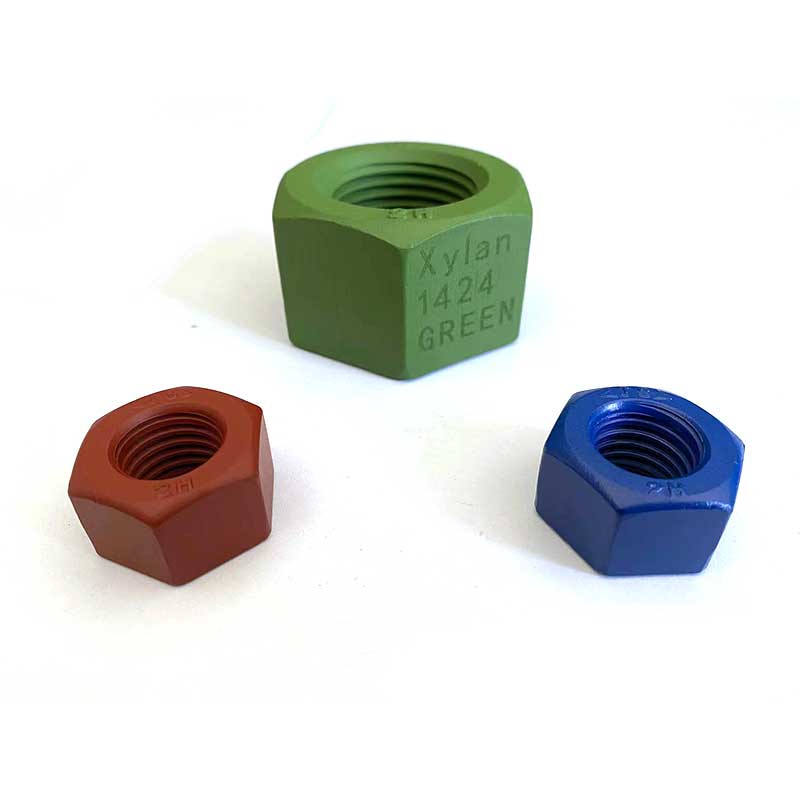
Coating grades play an important role in the corrosion resistance, friction control, and installation performance of 2H Nut Teflon. Different Xylan 1424 coating options, including D6586 Green #870, D6584 Deep Medium Blue #524, and D7809 Dark Brown, offer different finish specifications for industrial fastening requirements. In this article, we explain how coating selection, base material, surface preparation, and testing conditions affect the service performance of coated 2H nuts in oil and gas, chemical processing, and other demanding applications.
Table of Contents
- What Are the Different Coating Grades for 2H Nut Teflon?
- How Do Coating Grades Affect Corrosion Resistance?
- Comparison of Xylan 1424 Coating Options
- What Factors Should We Consider When Selecting a Coating?
- Where Are Teflon Coated 2H Nuts Commonly Used?
- How Do We Evaluate Coating and Fastener Quality?
- Frequently Asked Questions
What Are the Different Coating Grades for 2H Nut Teflon?
In industrial fastening, a high-strength nut needs more than mechanical strength when it operates in a corrosive environment. Moisture, chemicals, salt exposure, and repeated installation can all affect the long-term condition of threaded connections. This is why surface coating deserves attention alongside the nut's material and dimensional specifications.
At Dowson, we manufacture a range of industrial fasteners, including 2H Nut Teflon. This product combines a high-strength hex nut structure with a Teflon-based surface coating. The steel substrate provides the mechanical strength, while the coating helps create a protective barrier and a lower-friction contact surface.
Our current 2H Nut Teflon product specifications include three Xylan 1424 coating options:
- Xylan 1424 / D6586 Green #870
- Xylan 1424 / D6584 Deep Medium Blue #524
- Xylan 1424 / D7809 Dark Brown
These designations identify particular coating finishes. It is important not to assume that a different color automatically means a higher corrosion-resistance grade. The actual performance depends on the coating formulation, film thickness, pretreatment, application process, and the condition of the finished fastener.
For engineering projects, we recommend confirming the complete coating specification rather than selecting a nut based on color alone.
How Do Coating Grades Affect Corrosion Resistance?
The primary function of a protective coating is to reduce direct contact between the steel surface and corrosive substances. A properly applied fluoropolymer coating can help limit moisture penetration and chemical contact while providing a smoother surface during fastening.
However, the coating designation alone does not determine the final corrosion performance. Several manufacturing and application factors influence the result.
1. Coating Coverage and Film Thickness
Uniform coating coverage is essential, particularly around the hexagonal corners, bearing face, and internal threads. Thin or uneven areas can become vulnerable points when the nut is exposed to moisture or aggressive chemicals.
Internal threads require particular attention. Excessive coating buildup may reduce thread clearance and make installation difficult, while insufficient coverage can leave the steel exposed. We therefore recommend checking thread fit after coating instead of evaluating only the external appearance.
2. Surface Preparation Before Coating
Surface preparation directly affects coating adhesion. Oil, scale, rust, and other contaminants can interfere with the bonding process and create defects in the finished coating.
Depending on the specified coating system, pretreatment may involve cleaning, degreasing, or a compatible conversion layer. The correct process should be confirmed with the coating supplier and the applicable project specification.
3. Chemical and Environmental Exposure
A coating that performs well in a humid indoor environment may not provide the same service performance in an offshore installation or chemical processing plant.
For example, a nut used near seawater may face continuous salt exposure, while one installed in a chemical plant may encounter specific solvents, acids, or alkaline substances. These conditions require different compatibility assessments.
We advise matching the coating system to the actual operating environment, including temperature, chemical concentration, exposure duration, and maintenance conditions.
4. Friction and Installation Performance
Corrosion protection is not the only consideration. Xylan 1424 is also used as a dry-film lubricant coating for fasteners. Its low-friction surface can help reduce thread galling and make tightening behavior more consistent.
This is particularly relevant when assembling high-strength threaded connections. However, a lower coefficient of friction also changes the relationship between applied torque and bolt preload. Existing torque values should not automatically be reused after changing the coating system. The joint design and specified torque requirements need to be reviewed together.
Comparison of Xylan 1424 Coating Options
Dowson offers three listed Xylan 1424 finishes for its 2H Nut Teflon product. The following table summarizes the available designations and practical selection considerations.
| Coating Specification | Color / Finish | Key Consideration | Recommended Selection Check |
|---|---|---|---|
| Xylan 1424 / D6586 | Green #870 | Specified fluoropolymer coating finish | Confirm coating system, film thickness, and environmental requirements |
| Xylan 1424 / D6584 | Deep Medium Blue #524 | Specified fluoropolymer coating finish | Verify compatibility with the mating bolt and assembly requirements |
| Xylan 1424 / D7809 | Dark Brown | Specified fluoropolymer coating finish | Confirm the approved coating specification and inspection criteria |
One point worth emphasizing is that these three options should not be ranked by corrosion resistance based on their color codes. If a project requires a particular salt spray duration, coating thickness, or chemical-resistance level, the supplier should provide supporting technical documentation for the exact coating system used.
For additional technical information, refer to the PPG official website for Xylan coating information and the ASTM B117 salt spray testing standard.
What Factors Should We Consider When Selecting a Coating?
When selecting a coated 2H hex nut, we look beyond the coating color and consider how the complete fastening assembly will perform. The following points are particularly important during product specification and purchasing.
Base Material and Mechanical Requirements
The nut material must meet the mechanical requirements of the application before a coating is selected. Carbon steel and stainless steel have different mechanical and corrosion characteristics. The required nut grade, hardness, proof load, and compatibility with the mating bolt should be established first.
A coating improves surface performance, but it does not upgrade the underlying steel's strength grade. For high-strength connections, the specified nut standard and mechanical test requirements remain essential.
Operating Conditions
Consider whether the fastener will operate indoors, outdoors, near seawater, or in contact with industrial chemicals. Temperature fluctuations and repeated maintenance can also influence coating performance.
Thread Fit and Assembly Torque
Coating thickness can affect thread dimensions and assembly behavior. We recommend checking the finished nut against the required thread tolerance and testing it with the corresponding bolt or stud.
For torque-controlled connections, the coating's friction characteristics should be included in the joint calculation and installation procedure.
Project Testing Requirements
Before confirming a coating for a large order, establish the required inspection and acceptance criteria. These may include coating appearance, thickness, adhesion, thread fit, and corrosion testing.
For example, ASTM B117 provides a controlled salt fog testing procedure. However, salt spray hours should not be treated as a direct prediction of actual service life. Real-world performance also depends on exposure conditions, coating damage, and maintenance.
Where Are Teflon Coated 2H Nuts Commonly Used?
The combination of a high-strength hex nut structure and a low-friction protective coating makes 2H Nut Teflon suitable for several industrial fastening applications, provided that the selected material and coating system meet the project requirements.
Oil and Gas Equipment
Oil and gas installations frequently expose fasteners to moisture, salt, temperature changes, and demanding operating conditions. Coated nuts can help reduce surface corrosion and thread galling in suitable bolted connections.
For offshore and pipeline projects, we recommend confirming the complete coating system, compatibility with the mating stud bolt, and the specified corrosion testing requirements before production.
Chemical Processing Plants
Chemical processing equipment may operate around cleaning agents, process fluids, and corrosive atmospheres. A suitable fluoropolymer coating can provide an additional protective layer, but chemical compatibility must be checked against the actual substances and their concentrations.
Industrial Machinery and Heavy Equipment
In machinery assemblies, repeated maintenance and fastening operations can cause friction-related problems. The lower-friction properties of Teflon coated nuts can help reduce galling during installation and removal, especially when the complete threaded assembly is designed for the selected coating.
How Do We Evaluate Coating and Fastener Quality?
At Dowson's Fasteners, our manufacturing background helps us understand why product quality needs to be controlled at both the production and inspection stages.
Our fastening business started in 1990 under the name HAIYAN HURRAS IMPORT AND EXPORT CO., LTD. In 2008, we established DOWSON'S FASTENERS CO., LTD. in Haiyan, Zhejiang, China, a well-known fastener manufacturing center.
Our production facility covers approximately 6,500 square meters and is equipped with forging bolt machines, threading machines, hot heading bolt machines, cold-forging nut machines, hot forging nut machines, and automatic punching machines.
Our testing equipment includes a Vickers hardness tester and a tensile testing machine. These facilities support the inspection of mechanical properties and manufacturing quality. For coated fasteners, we also consider the additional requirements associated with surface treatment and finished-thread dimensions.
For a 2H Nut Teflon order, we recommend paying attention to the following quality checkpoints:
| Inspection Item | What We Check | Why It Matters |
|---|---|---|
| Base Material | Material grade and applicable product specification | Ensures the nut meets the required mechanical and application conditions |
| Hardness and Strength | Hardness and relevant mechanical test results | Confirms compliance with the specified strength requirements |
| Thread Dimensions | Thread size, tolerance, and mating fit | Prevents installation problems caused by dimensional variation or coating buildup |
| Coating Appearance | Coverage, uniformity, and visible surface defects | Helps identify incomplete coating or application irregularities |
| Coating Thickness | Dry film thickness against the agreed specification | Supports coating consistency and dimensional control |
| Corrosion Testing | Salt spray testing under the agreed procedure and acceptance criteria | Evaluates corrosion performance under controlled conditions |
Mechanical testing and coating inspection serve different purposes. For threaded fastener mechanical testing, buyers and engineers can also refer to ASTM F606/F606M. The applicable product standard and purchase specification should determine the final inspection requirements.
We also benefit from our location in Haiyan, with convenient access to Shanghai and Ningbo ports. This provides practical logistics options for international container shipments.
Frequently Asked Questions
1. What is 2H Nut Teflon?
2H Nut Teflon is a high-strength hex nut with a Teflon-based surface coating. The steel substrate provides mechanical strength, while the coating helps improve surface protection, reduce friction, and resist galling. It is used in demanding industrial fastening applications where the specified material and coating system are suitable.
2. What Xylan 1424 coating grades does Dowson offer for 2H nuts?
Dowson lists three options: Xylan 1424 / D6586 Green #870, Xylan 1424 / D6584 Deep Medium Blue #524, and Xylan 1424 / D7809 Dark Brown. Customers should confirm the exact coating designation and technical requirements when placing an order.
3. Does a darker or different coating color mean better corrosion resistance?
No. Coating color is not a reliable indicator of corrosion performance. Protection depends on the coating formulation, pretreatment, film thickness, application quality, and testing conditions. Technical specifications and test reports are more useful than color comparisons.
4. Can Teflon coated 2H nuts be used in offshore applications?
They can be considered for suitable offshore fastening applications, subject to the required material grade, coating system, corrosion testing, and project specifications. Salt exposure, moisture, temperature, and compatibility with the mating bolt should all be evaluated before selection.
5. Does Teflon coating affect the tightening torque of a nut?
Yes. A low-friction coating changes the friction between the nut, bolt threads, and bearing surfaces. As a result, the torque-to-preload relationship may differ from that of an uncoated fastener. The installation torque should be established for the actual coated assembly rather than copied from an uncoated specification.
6. How can we verify the corrosion resistance of coated 2H nuts?
Ask for the coating specification, dry film thickness requirements, surface preparation details, and relevant corrosion test reports. ASTM B117 is commonly referenced for salt fog testing, but the exposure duration and acceptance criteria must be agreed upon for the specific project.
Discuss Your 2H Nut Teflon Requirements with Dowson
Selecting the right coating grade requires more than choosing a color. Base material, thread fit, coating coverage, friction behavior, and the actual operating environment all influence the reliability of a finished fastening assembly.
With a fastening industry history dating back to 1990, a 6,500-square-meter manufacturing facility, and dedicated production and testing equipment, Dowson's Fasteners supplies a wide range of industrial fasteners, including bolts, screws, washers, and coated nuts.
If your project requires 2H Nut Teflon with specific Xylan 1424 coating designations, contact our team with your required size, material grade, coating specification, and application conditions. We can discuss the appropriate product configuration and manufacturing requirements for your order.
Send Inquiry



X
We use cookies to offer you a better browsing experience, analyze site traffic and personalize content. By using this site, you agree to our use of cookies.
Privacy Policy