Abstract
U Bolts are essential fastening components widely used in mechanical, automotive, construction, and piping systems. Their U-shaped design provides strong clamping force and stability for round or cylindrical objects such as pipes, tubes, and poles. However, improper selection or installation can lead to structural failure, vibration loosening, or equipment damage. This article provides a comprehensive guide to understanding U Bolts, their applications, installation methods, and best practices to ensure long-term reliability and safety.
1. Overview of U Bolts
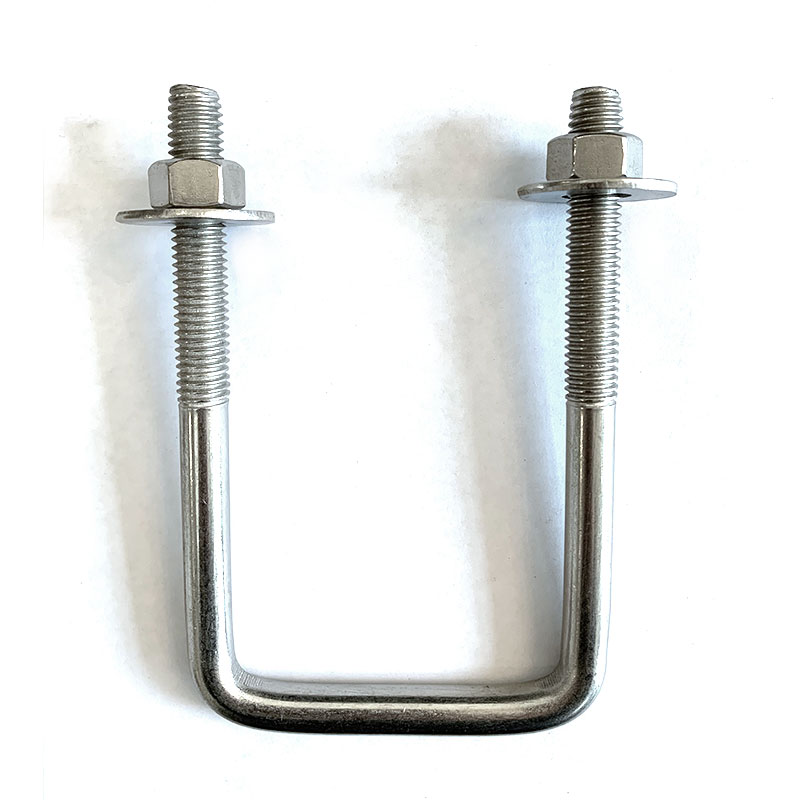
A U Bolt is a U-shaped fastener with threaded ends designed to secure pipes, rods, or structural components to a supporting surface. It is typically used in combination with nuts and sometimes washers to distribute load evenly. The simplicity of its design makes it highly reliable in both static and dynamic load environments.
Industries rely on U Bolts for their strength, adaptability, and cost-effectiveness. Despite their simple appearance, correct installation and material selection are critical for ensuring performance under stress conditions such as vibration, thermal expansion, and heavy load bearing.
2. How U Bolts Work
A U Bolt functions by wrapping around a cylindrical object and applying compressive force through tightened nuts on its threaded ends. This creates friction between the clamped object and the mounting surface, preventing movement.
-
Clamping force ensures stability under vibration
-
Threaded ends allow adjustable tightening
-
Load distribution reduces stress concentration
The efficiency of a U Bolt depends on proper torque application and correct alignment with the mounted structure.
3. Common Applications
U Bolts are used in a wide range of industries due to their versatility. Typical applications include:
-
Pipe and conduit fastening in plumbing systems
-
Suspension systems in automotive engineering
-
Structural steel and construction frameworks
-
Marine equipment and offshore structures
-
Power transmission pole mounting
Their ability to secure round or irregular shapes makes them indispensable in engineering design.
4. Materials and Coatings
Choosing the correct material for a U Bolt is crucial for durability and performance. Different environments require different material properties.
-
Carbon Steel: High strength, cost-effective, commonly used in indoor applications
-
Stainless Steel: Corrosion resistance for outdoor and marine environments
-
Galvanized Steel: Zinc-coated for enhanced rust protection
-
Alloy Steel: Used in high-stress industrial applications
Coatings such as hot-dip galvanization or zinc plating significantly extend service life in corrosive environments.
5. Sizing and Selection Guide
Proper sizing ensures secure installation and prevents premature failure. Key factors include diameter, thread length, and load capacity.
|
Parameter
|
Description
|
Selection Tip
|
|
Diameter
|
Inner width of U shape
|
Must match pipe or rod size closely
|
|
Thread Length
|
Length of threaded ends
|
Ensure enough space for nut tightening
|
|
Material Strength
|
Tensile capacity
|
Choose based on load requirements
|
6. Installation Procedure
Correct installation is essential to maximize performance and safety. Follow these steps carefully:
-
Position the U Bolt around the pipe or structure
-
Align both threaded ends evenly through mounting holes
-
Place washers and hand-tighten nuts
-
Use a torque wrench to tighten evenly on both sides
-
Check alignment and ensure no distortion occurs
Avoid over-tightening, as it may damage the threaded section or deform the clamped material.
7. Common Installation Mistakes
Improper installation can significantly reduce performance. Common mistakes include:
-
Using incorrect size U Bolts
-
Uneven torque application
-
Ignoring corrosion protection requirements
-
Over-tightening leading to material deformation
-
Failure to inspect after installation
Avoiding these errors improves safety and extends service life.
8. U Bolt Comparison Table
|
Type
|
Strength
|
Corrosion Resistance
|
Typical Use
|
|
Carbon Steel
|
High
|
Low
|
Indoor structural support
|
|
Stainless Steel
|
Medium-High
|
High
|
Marine and outdoor use
|
|
Galvanized Steel
|
Medium
|
Medium-High
|
General industrial applications
|
9. Maintenance and Inspection
Regular inspection ensures continued reliability of U Bolt installations. Maintenance practices include:
-
Checking for corrosion or rust formation
-
Verifying torque levels periodically
-
Replacing damaged or worn components
-
Ensuring alignment remains stable under vibration
Preventive maintenance reduces the risk of unexpected failures in critical systems.
10. Frequently Asked Questions
Q1: What is the main purpose of a U Bolt?
A U Bolt is used to secure pipes, tubes, or structural elements firmly to a supporting surface.
Q2: How do I choose the right size?
Measure the outer diameter of the object being secured and select a U Bolt with a matching internal width.
Q3: Can U Bolts be reused?
Yes, but only if they are not deformed, corroded, or structurally compromised.
Q4: What happens if I overtighten a U Bolt?
Overtightening can damage threads, reduce clamping effectiveness, or deform the mounted structure.
Q5: Are stainless steel U Bolts better?
They are preferred in corrosive environments due to their superior rust resistance.
11. Conclusion
U Bolts are simple yet highly effective fastening solutions used across multiple industries. Their performance depends heavily on correct sizing, material selection, and precise installation techniques. By following proper guidelines, users can ensure long-lasting stability and safety in their applications.
For high-quality fastening solutions and engineered reliability, Dowson provides professional-grade U Bolts designed for demanding industrial environments. Dowson invites you to contact us for tailored solutions and technical support that ensure your projects meet the highest standards of performance and durability.